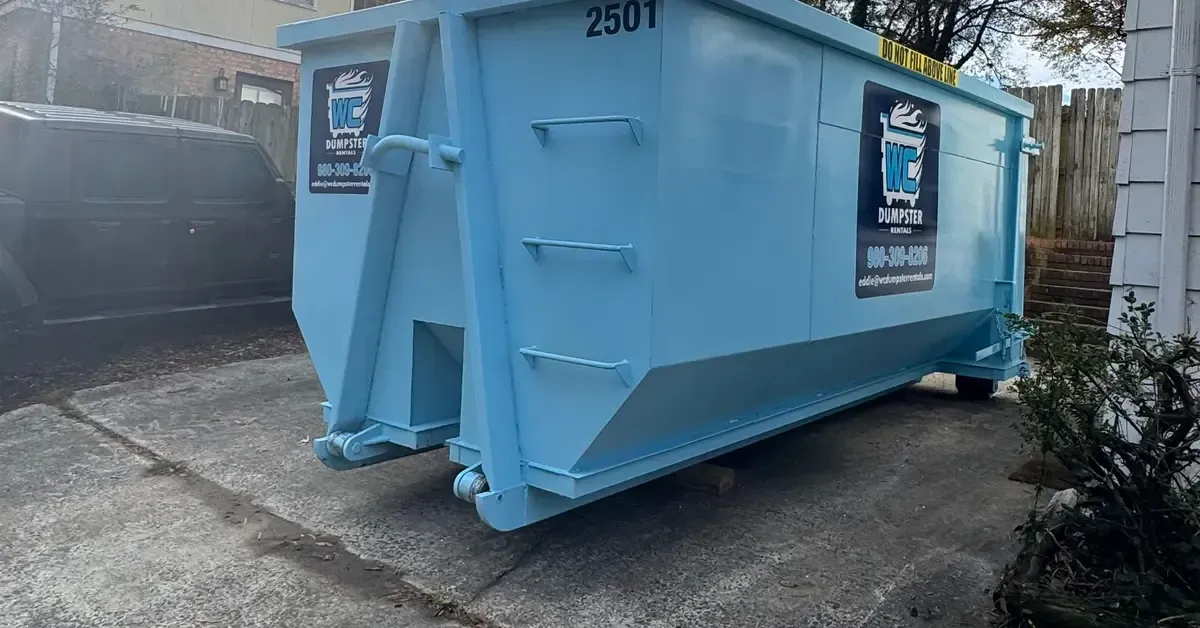
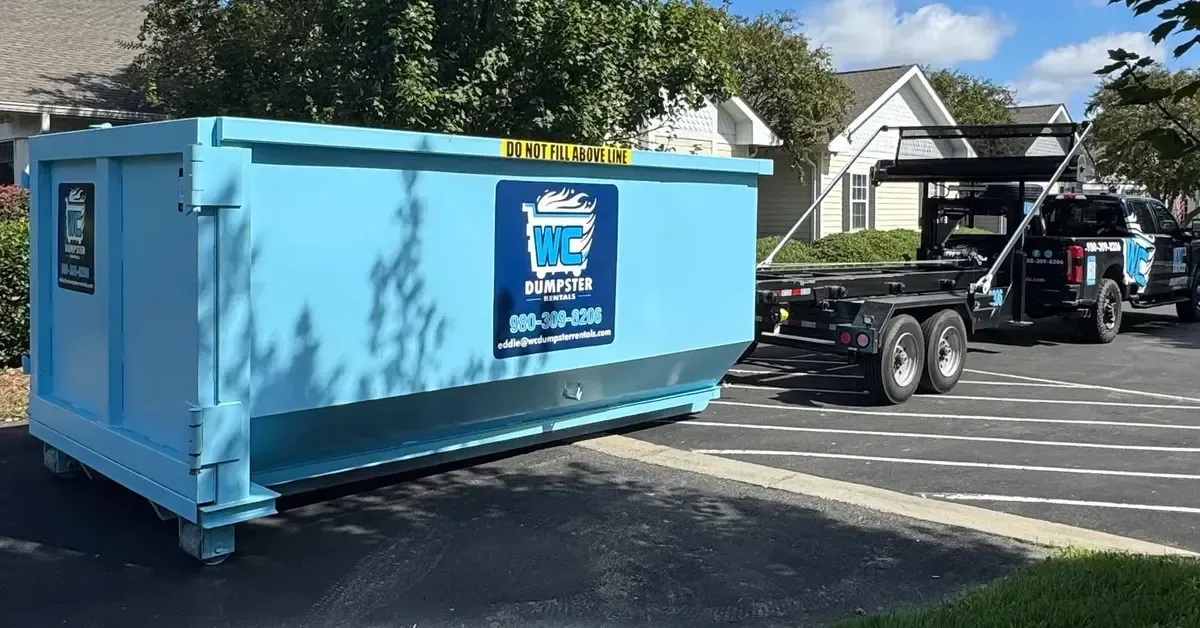
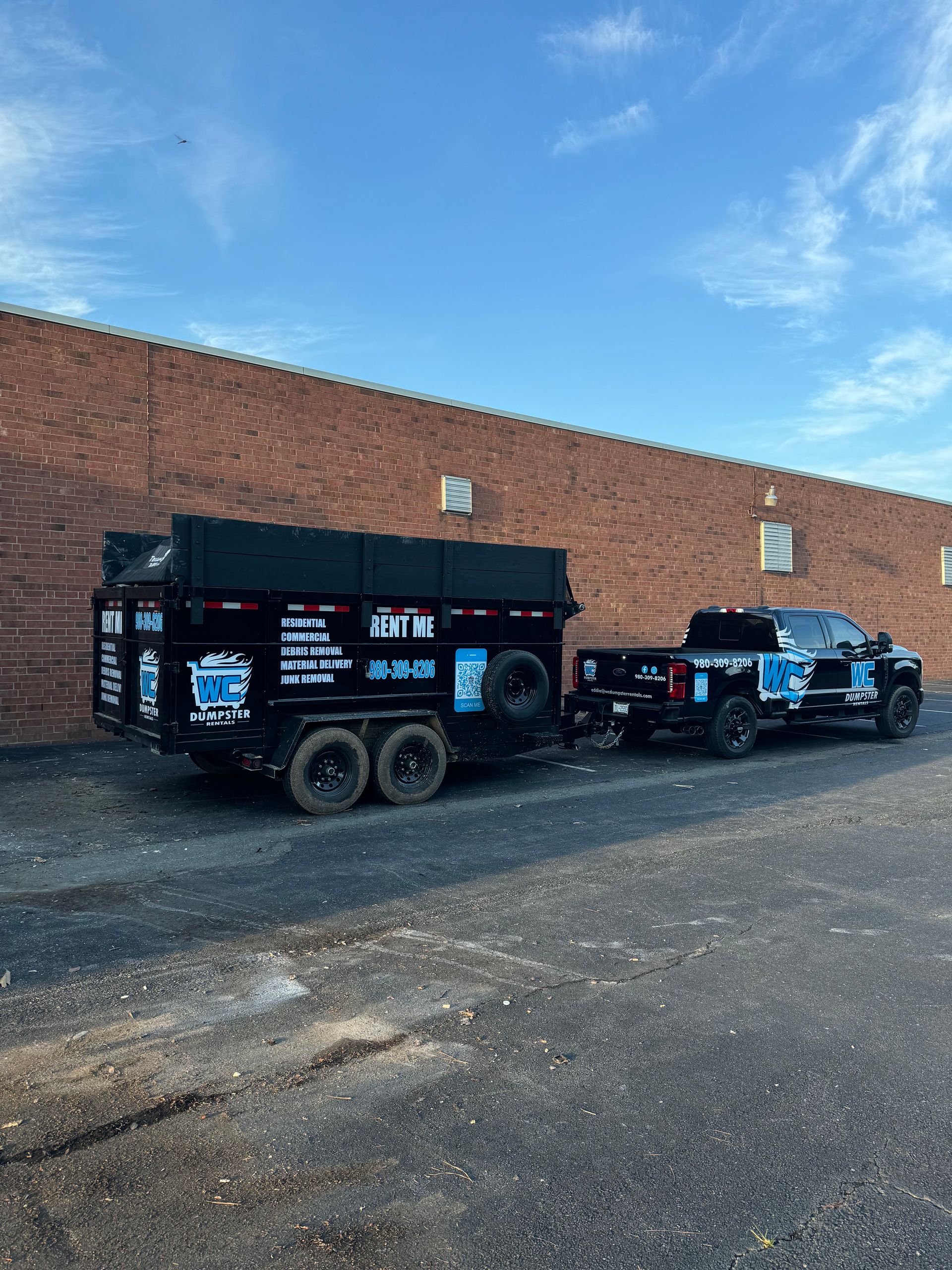
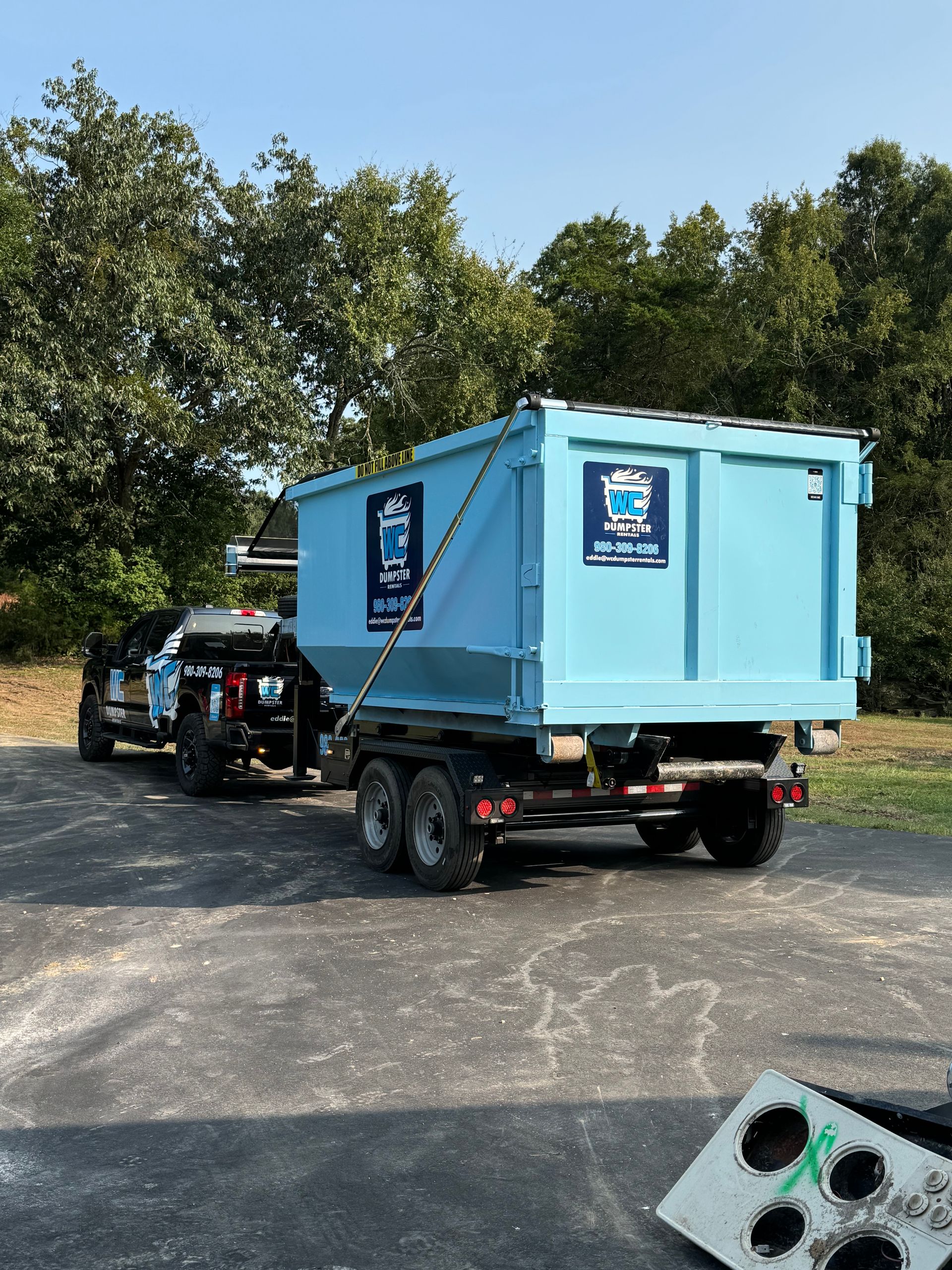
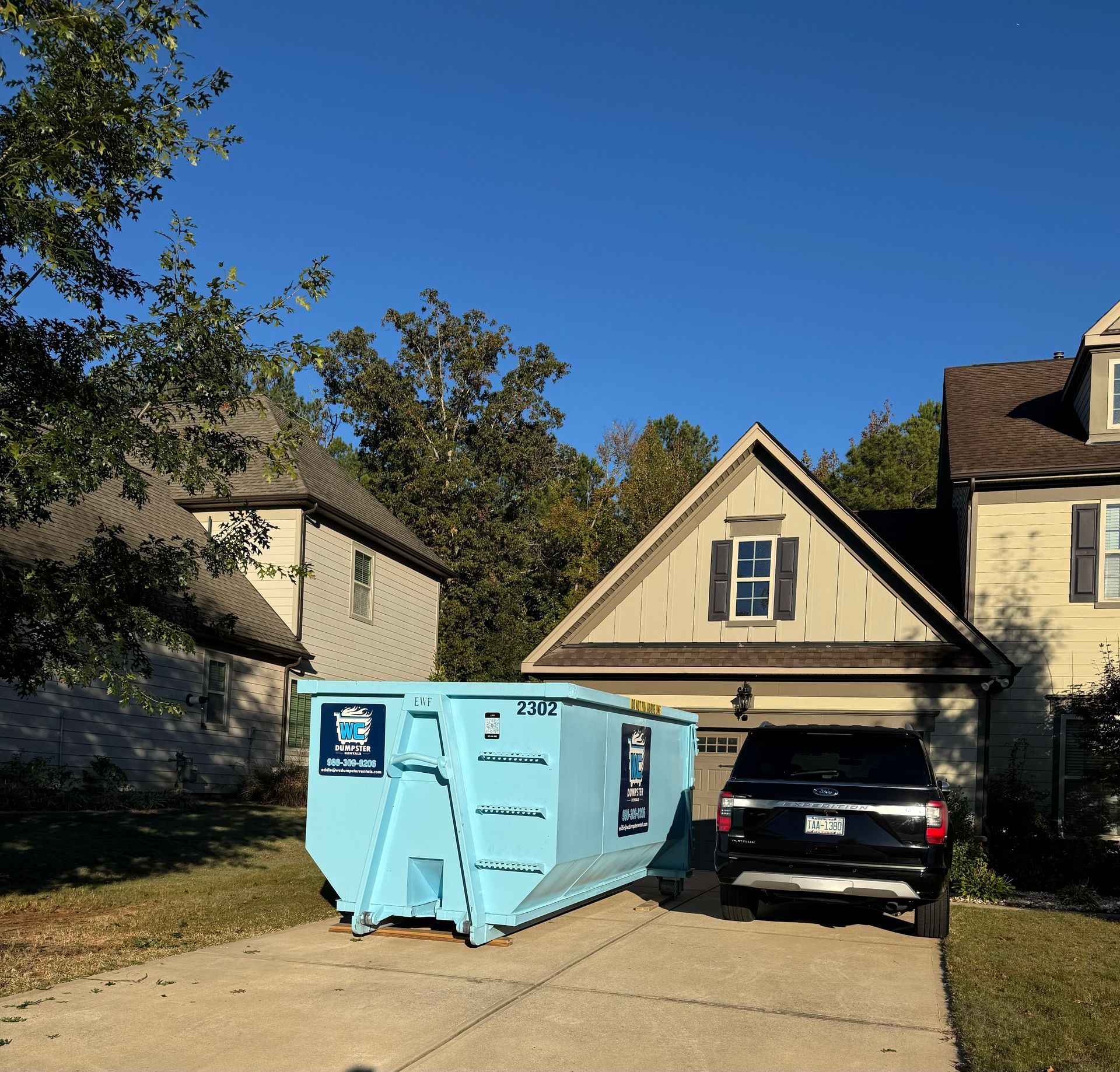
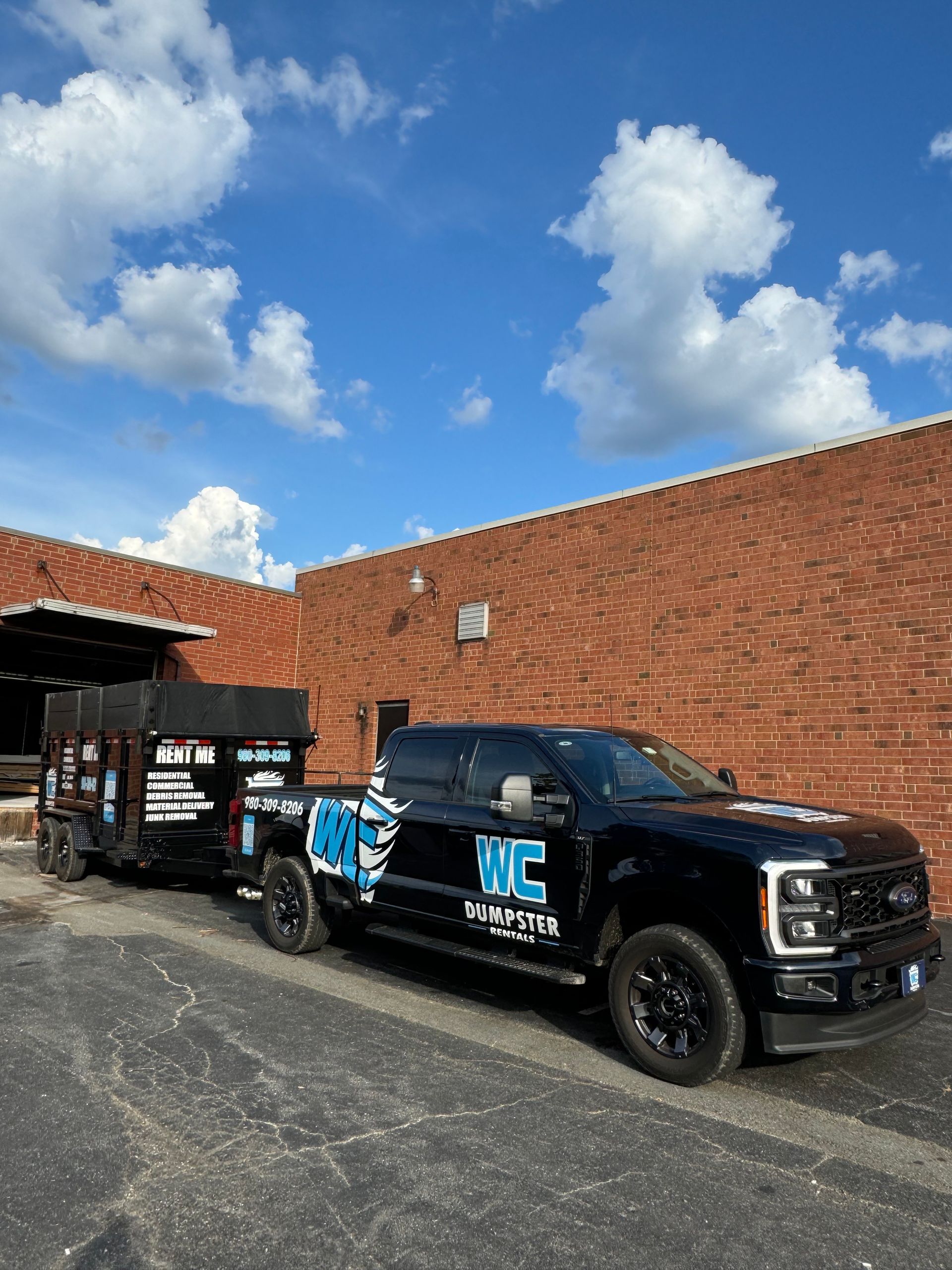
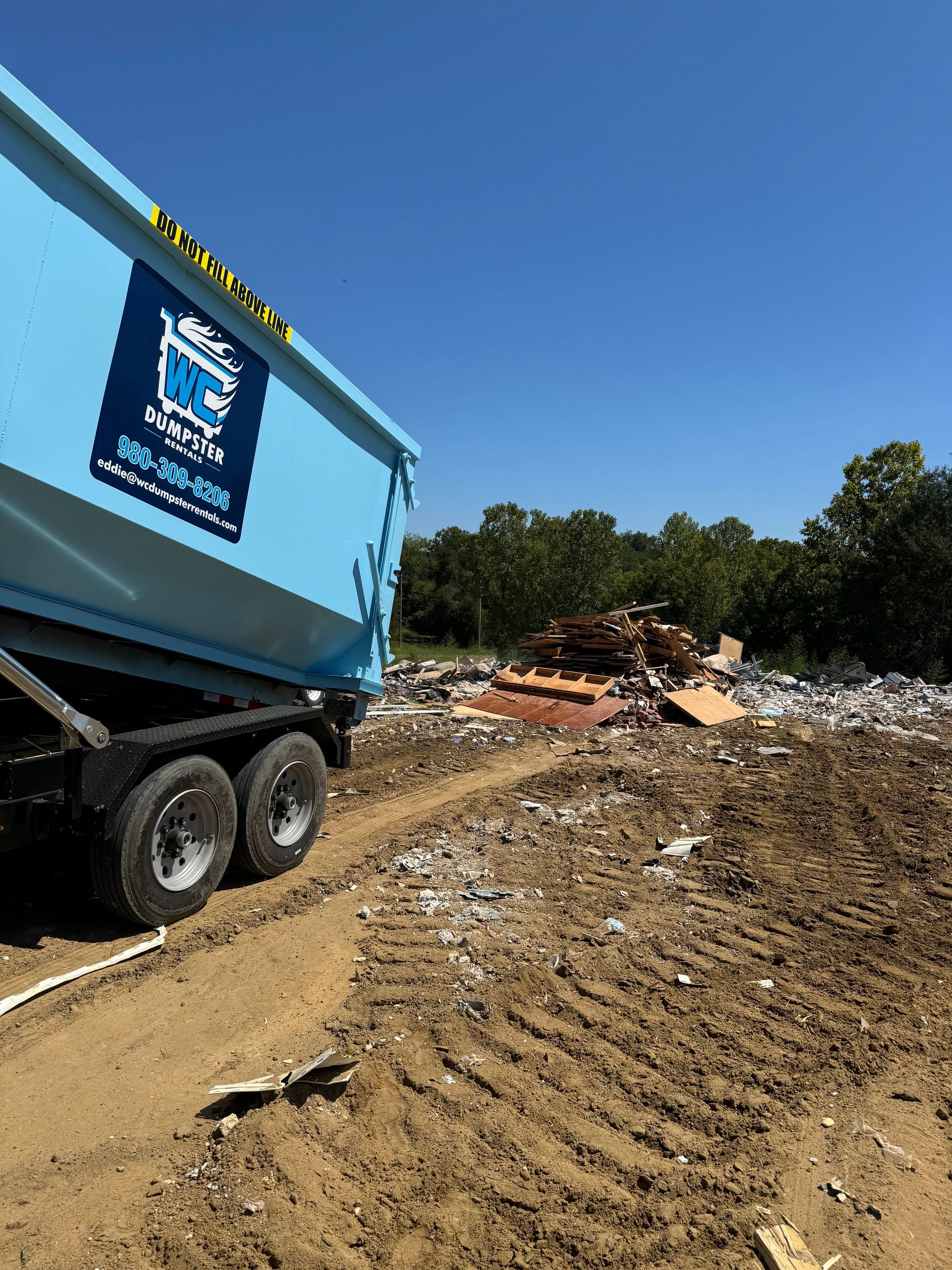
A roof replacement in Charlotte NC typically generates 2 to 4 tons of shingle debris. A 15-yard dumpster covers most single-story residential roofs, a 10-yard size works for small repairs, and a 20-yard container handles larger homes or multi-layer tear-offs. Weight limits matter more than volume with shingles, so confirming tonnage before booking prevents overage charges. Same-area delivery is available across Charlotte and Mecklenburg County, with scheduling built around roofing crew timelines and storm season demand.
Shingles are coming off the roof faster than the ground crew can clear them, underlayment is piling up along the driveway, and the roofing crew needs somewhere to put debris that keeps moving. A roofing dumpster rental Charlotte NC homeowners can count on removes that bottleneck before it starts. Once the container sits on site before the first shingle comes off, the crew works without pausing to haul debris to a truck bed, and the property stays clear for the length of the project.
Roof replacements in Charlotte generate far more waste than most homeowners expect, and the right container size depends on roof area, layer count, and material weight. This guide walks through debris volume, sizing, weight limits, accepted materials, placement, and scheduling for any roofing project in Mecklenburg County.
How Much Debris Does a Roof Replacement Generate?
A typical 2,000 square foot residential roof produces roughly 2 to 4 tons of shingle debris once tear-off is complete. That figure includes old shingles, felt underlayment, and whatever wood decking needs replacing along the way. Most homeowners underestimate this volume by half, since asphalt shingles are dense and stack heavier than the pile suggests.
A
dumpster rental in Charlotte NC is the practical solution for nearly every roofing job in the area, since hauling shingle debris in truck beds or trailers takes multiple trips and slows the crew down. A single roll-off container on site handles the entire tear-off in one place, and pickup happens as soon as the job wraps.
What Size Dumpster Do You Need for a Roof Replacement?
10-Yard Dumpster: Small Roof Repairs
A 10-yard container suits partial repairs, small garage roofs, or shed roofing where only a section of shingles comes off. Weight still matters here, since shingles are heavy for their volume and a small dumpster fills its weight limit before it looks full.
15-Yard Dumpster: Standard Residential Roofs
Most single-story Charlotte homes with a full tear-off fit a 15-yard dumpster. This size works well for roofs up to roughly 2,000 to 2,500 square feet with a single layer of shingles, covering the debris load without running out of capacity mid-project.
20-Yard Dumpster: Larger Homes and Multi-Layer Tear-Offs
Two-story homes, larger roof footprints, or jobs stripping multiple layers of shingles call for a 20-yard container. Very large roofs may still need a second haul partway through the project, and scheduling that pickup in advance keeps the crew from waiting on an empty container. A full breakdown of
our available dumpster sizes helps match container capacity to roof size before booking.
Understanding Weight Limits for Roofing Dumpsters
Asphalt shingles weigh far more per square foot than general household debris, which makes weight limits the real constraint on a roofing dumpster, not visual fill level. A container can look half empty and still sit at its weight cap once shingles settle. Overloading a dumpster brings extra charges and can delay pickup if the load exceeds what the hauling truck can legally carry.
Estimating conservatively and communicating roof size, layer count, and square footage with the rental provider before delivery avoids surprises. Larger or multi-layer tear-offs often benefit from a slightly bigger container or a planned second haul rather than pushing a smaller dumpster past its limit.
What Roofing Debris Can Go in a Roll-Off Dumpster?
Accepted Roofing Materials
● Asphalt shingles
● Felt underlayment
● Wood decking
● Metal flashing
● Gutters and fascia
● Drip edge
● Nails and fasteners mixed in with general debris
Prohibited or Restricted Materials
Asbestos-containing roofing materials, common in Charlotte homes built before 1980, cannot go into a standard roll-off dumpster and require separate testing and disposal. Lead flashing on older properties falls into the same category. Homeowners working on an older roof should confirm material safety before tear-off begins, and can reference
EPA guidelines on construction and demolition debris for local guidance on hazardous material handling.
Where to Place the Dumpster on a Roofing Job Site
Placing the dumpster directly below the tear-off area lets the crew slide shingles off the roof and straight into the container, cutting down on manual carrying. Driveway surfaces need protection from the container's weight, particularly on older concrete or asphalt driveways common across Charlotte neighborhoods.
When driveway access is limited or the slope makes placement difficult, street placement is often the better option, subject to local permitting where required. Delivery timing should match the roofing crew's start date exactly, since a container sitting empty for days before work begins takes up rental time without being used.
Scheduling a Roofing Dumpster in Charlotte NC
Roofing crews move fast once a job starts, and having the dumpster on site before the first shingle comes off keeps the schedule on track. Booking ahead, whether by phone or online, locks in a delivery window that matches the crew's start date across Charlotte and surrounding areas, including
dumpster rental in Concord NC for jobs just outside the city.
Storm season and hail damage drive a large share of last-minute roof replacements in the Charlotte area, and aging housing stock across many neighborhoods adds a steady stream of planned replacements on top of that. Requesting same-area service ahead of a busy season, rather than waiting until the crew is ready to start, helps avoid delivery delays.
Tips for Roofing Contractors Renting Dumpsters in Charlotte
● Pre-position the dumpster before the job starts so the crew never waits on delivery
● Keep chutes or slide boards ready to move shingles directly off the roof
● Monitor fill level throughout the day, since shingles reach weight limits before visual capacity
● Call to schedule pickup as soon as the tear-off and haul-away are complete
Contractors running multiple roofing jobs across Mecklenburg County can also look into recurring rental accounts to simplify scheduling across sites.
Conclusion
Choosing the right dumpster size, respecting weight limits, and scheduling delivery ahead of the crew's start date make the difference between a roofing project that runs smoothly and one that stalls waiting on debris removal. A roll-off dumpster on site before tear-off begins remains the standard approach for roofing jobs of any size across Charlotte.
Call
980-309-8206 or visit
our website to book a roofing dumpster before the crew arrives.