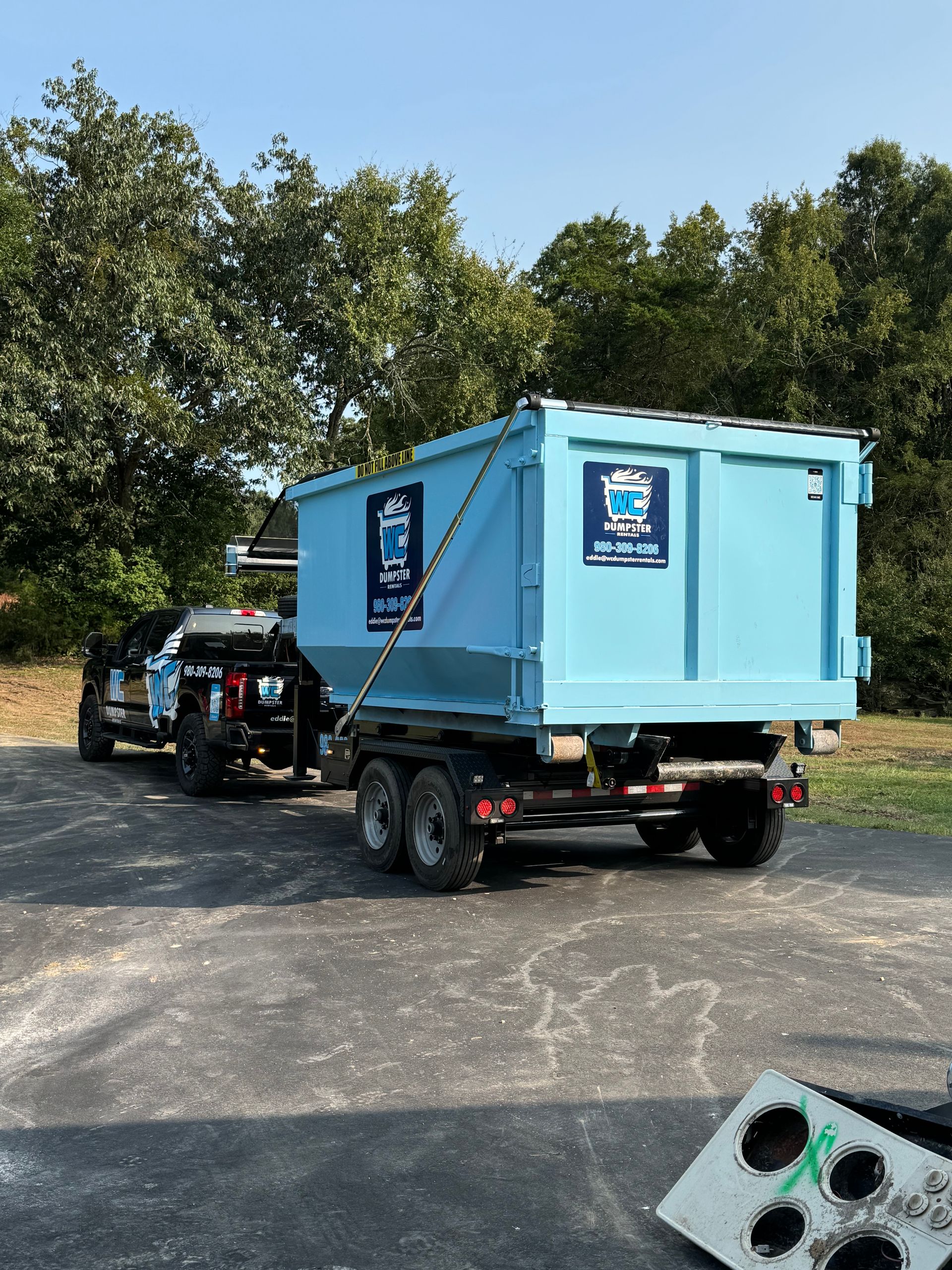
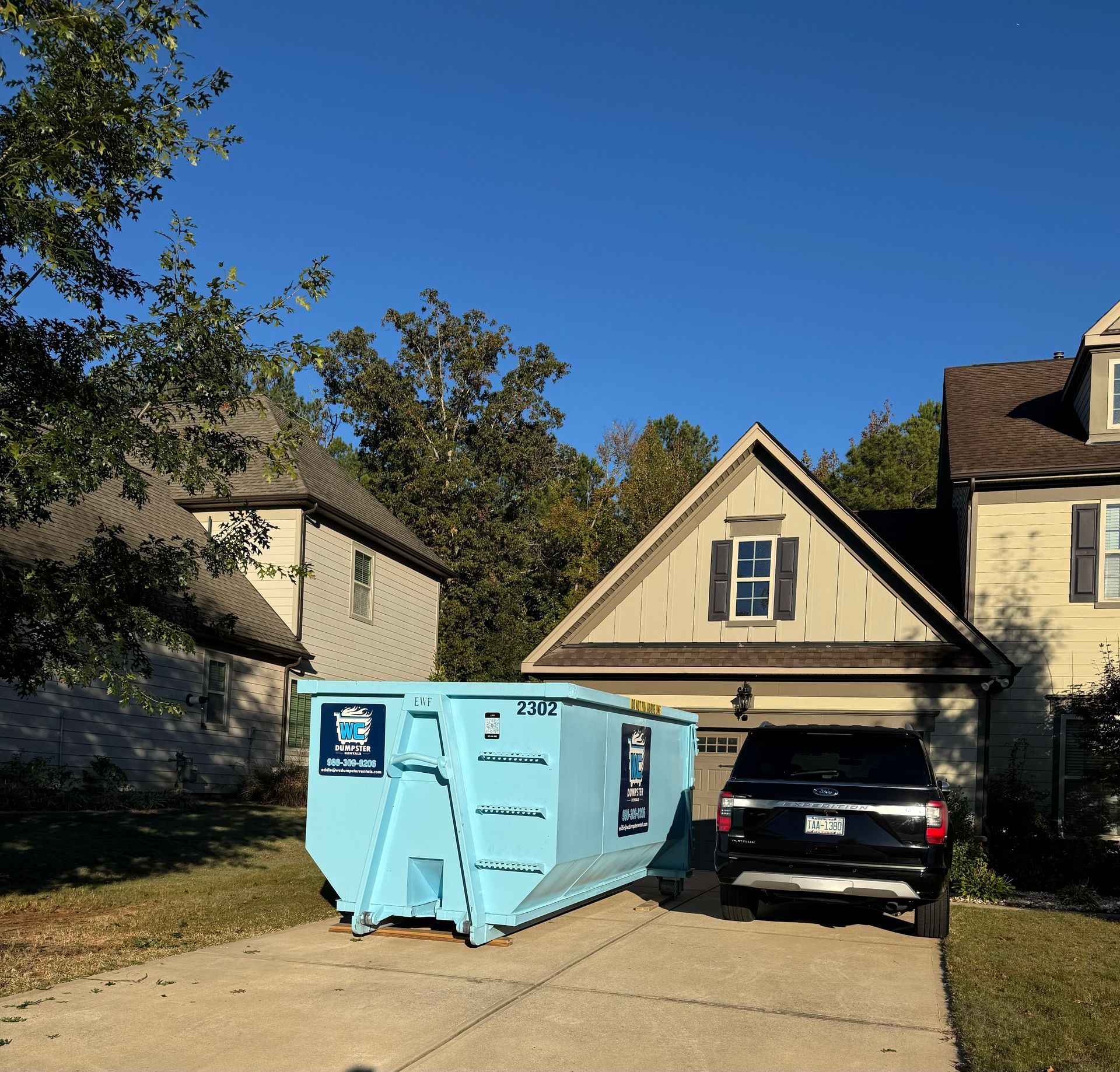
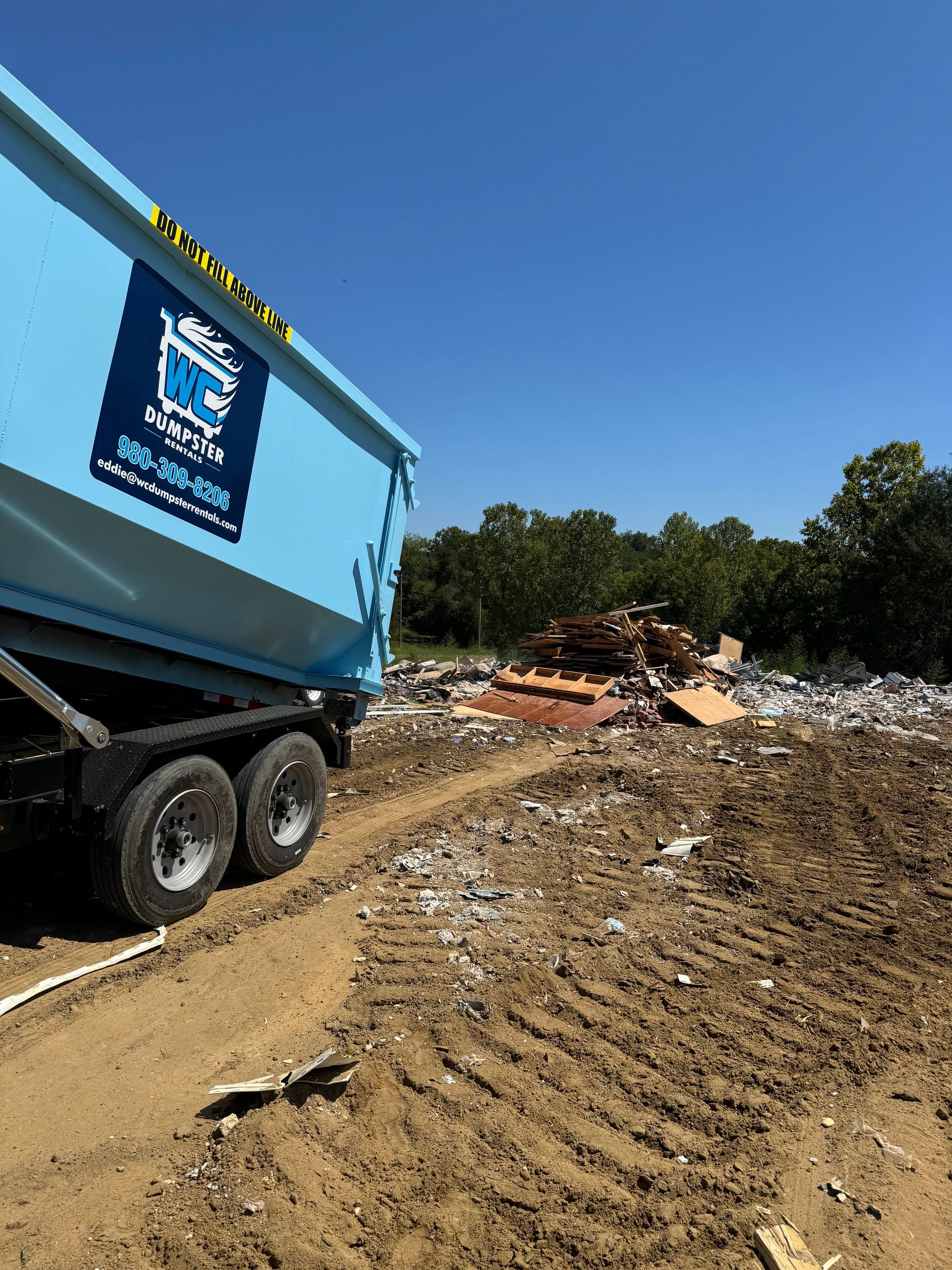
North Carolina dumpsters accept most non-hazardous household junk, furniture, yard waste, and renovation debris, including drywall, flooring, cabinets, and roofing shingles. They cannot accept hazardous waste, electronics, tires, batteries, propane tanks, or asbestos-containing materials. Mattresses, concrete, dirt, and freon-containing appliances fall into special categories with their own rules, so confirming a specific item before loading it prevents an unexpected fee or a rejected pickup.
A homeowner staring at a driveway full of renovation debris, old furniture, and yard clippings often faces the same question before the first load goes in: what can go in a dumpster in North Carolina, and what needs to be sorted out first. Guessing wrong on a single item can lead to an unexpected fee, a rejected pickup, or a delay on an otherwise straightforward project. North Carolina follows its own solid waste regulations, and Mecklenburg County adds a layer of local guidance on top of the state framework. This guide breaks down the categories of accepted materials, walks through the items that cannot go in a rental dumpster in North Carolina, and covers the gray areas that trip up even experienced renovators. Projects that rely on
dumpster rental in Charlotte NC move faster and stay on budget when the sorting happens before the dumpster arrives rather than after.
Rules around accepted and prohibited materials exist for a reason. Certain items create environmental risk once they reach a landfill, others pose a safety hazard to the crew loading and hauling the container, and some require a certified recycling process that a standard dumpster cannot provide. Understanding these categories in advance turns a potentially confusing process into a short checklist that takes only a few minutes to work through before the first item goes in.
What You Can Put in a Rental Dumpster in North Carolina
A rental dumpster in North Carolina is built to handle the bulk of a cleanout or renovation project. The categories below cover the materials most homeowners and contractors load without any special preparation. In practice, the large majority of what fills a dumpster during a typical project falls into one of these accepted categories, which is worth keeping in mind once the prohibited list further down starts to feel long.
Household and Furniture Items
A household cleanout in Charlotte, Concord, or the surrounding areas typically starts with the largest and heaviest items first, since these take up the most space and are easiest to plan around once they are out of the way.
• Mattresses and box springs, though local rules should be verified before loading
• Sofas, chairs, tables, and other furniture
• Clothing, linens, and textiles
• Books, media, and general household goods
• Toys and children's items
• Small non-hazardous appliances, such as toasters, microwaves, and coffee makers
Bulky furniture and mattresses tend to fill space quickly, so loading them early in a cleanout leaves room to plan the rest of the fill efficiently. Breaking down larger furniture pieces where possible, such as removing legs from a table or disassembling a bed frame, also frees up additional space inside the container and reduces the number of awkward gaps that form when bulky items are stacked whole.
Renovation and Construction Debris
• Drywall and plaster
• Lumber and wood scraps
• Flooring, including carpet, tile, and hardwood
• Cabinets, countertops, and fixtures
• Doors and windows, with glass wrapped separately to prevent injury during pickup
• Insulation
• Roofing shingles
• Metal scraps
Renovation projects often generate more volume than expected once demolition begins, and choosing the right container size upfront helps avoid a second rental mid-project. A quick look at
our available dumpster sizes and rental options makes it easier to match the container to the scope of the job before the first wall comes down. Kitchen and bathroom remodels tend to generate more debris than expected once cabinets and fixtures come out, while a full gut renovation can fill a large container faster than a single-room refresh. Contractors managing multiple trades on the same job often find it useful to schedule a swap partway through a larger project rather than waiting for a single container to handle demolition, framing, and finish work all at once.
Yard and Landscaping Waste
• Tree branches and brush
• Grass clippings and leaves
• Sod
• Dirt, within weight limits
• Fencing and landscape timbers
Dirt and concrete carry weight restrictions even when they are technically accepted, since a full dumpster of either material can exceed the container's rated capacity long before it looks full. Confirming weight limits before loading heavy material prevents overage charges. A layer of lighter yard debris such as branches and leaves mixed with a smaller amount of dirt or sod typically stays within limits more comfortably than a container loaded with dirt alone. Larger landscaping projects that generate significant amounts of dirt or concrete may benefit from a dedicated container rather than sharing space with general yard waste.
Appliances
Most major appliances are accepted in a rental dumpster. Refrigerators, freezers, air conditioning units, and dehumidifiers are the exception, since these typically require certified freon removal before they can be loaded. Checking with the provider before placing any refrigeration appliance in the dumpster avoids a rejected load on pickup day. Stoves, dishwashers, washers, and dryers are generally accepted without any special preparation, which makes a kitchen or laundry room upgrade one of the more straightforward projects to plan around. Many appliance retailers also offer haul-away service on a new purchase, which can handle the freon-removal step automatically and simplify the swap even further.
What Cannot Go in a Rental Dumpster in North Carolina
Certain materials are restricted from standard rental dumpsters under state and local regulations, regardless of the size of the container or the length of the rental. The categories below cover the items that require a separate disposal path. Most of these restrictions come down to the same underlying concern: keeping hazardous or regulated material out of the standard landfill stream and routing it instead to a facility equipped to handle it safely.
Hazardous Household Waste
• Paints and stains
• Chemical solvents
• Motor oil and antifreeze
• Pesticides and fertilizers
• Pool chemicals
Hazardous household waste requires a dedicated drop-off channel rather than a rental dumpster. The
EPA guidelines on household hazardous waste outline why these materials are treated differently from standard debris and what proper handling looks like for homeowners managing a cleanout. Leftover paint that has fully dried and hardened is sometimes treated differently from liquid paint under local guidance, so checking current rules before disposal is worth the extra step rather than assuming a can is automatically excluded.
Electronics and E-Waste
• Televisions
• Computers and monitors
• Printers and other electronics
North Carolina maintains specific e-waste regulations that keep electronics out of standard waste streams. The
NC DEQ solid waste management regulations page lists certified recyclers equipped to handle televisions, computers, and other electronics properly. Many retailers that sell new electronics also participate in take-back programs, which offers another convenient option for smaller items like printers and monitors.
Tires
Passenger car tires, truck tires, and all rubber tires are prohibited from standard dumpsters statewide. Local tire retailers and auto shops typically accept used tires, often at no cost when a replacement is purchased at the same visit. Tire disposal fees at these locations are usually modest even without a purchase, which makes this one of the easier prohibited categories to route to the right place.
Batteries and Propane
Car batteries, rechargeable batteries, propane tanks, and other fuel containers all require special disposal channels rather than a standard dumpster. Many auto parts retailers accept batteries for recycling, and propane exchange locations typically handle empty or partially full tanks. Rechargeable batteries from power tools, laptops, and household electronics are often accepted at the same retail drop-off points that handle e-waste, which simplifies the process when multiple prohibited items need to be dropped off at once.
Asbestos-Containing Materials
Older floor tiles, roof shingles, insulation, and ceiling tiles installed before the 1980s may contain asbestos. Testing by a qualified professional and licensed abatement are required before any suspected asbestos material can be removed and disposed of. Loading these materials into a standard dumpster without testing creates a regulatory and health risk for everyone involved in the project. Homes built or renovated before the 1980s are the most likely to contain these materials, which makes a professional test worth scheduling early in any older-home renovation.
Special Cases and Gray Areas
A handful of materials do not fit neatly into an accepted or prohibited category, and these gray areas are usually the source of the most questions before a rental begins.
• Concrete and dirt: accepted in limited quantities due to weight restrictions, with heavier loads sometimes requiring separate arrangements
• Mattresses: accepted by some providers but not all, so confirming acceptance before loading saves a trip
• Freon-containing appliances: require certified freon removal before disposal
• Medical waste: never accepted under any circumstance
These gray areas account for a large share of the questions that come up before a rental begins. A short call ahead of delivery clears up nearly all of them. Property managers and contractors working across multiple sites in the Charlotte metro often keep a running list of these confirmed exceptions for each provider, since acceptance policies on items like mattresses can vary slightly from one company to the next even within the same county.
What Happens If Prohibited Items End Up in a Dumpster?
Loading a prohibited item into a rental dumpster typically results in one of a few outcomes: an additional fee to cover proper handling, a rejected load that delays pickup, or in some cases a regulatory issue tied to how the material was disposed of. None of these outcomes are difficult to avoid. Sorting materials before the dumpster fills up, rather than after, keeps a project on schedule and on budget. Any uncertainty about a specific item is worth resolving with a quick call before booking rather than guessing at pickup. Providers routinely field these questions before a rental starts, and a five-minute conversation about a specific material almost always costs less time than sorting through a mixed load after the fact. A rejected pickup, in particular, can push a project timeline back by several days depending on scheduling, which makes the upfront check worth the small amount of time it takes.
Where to Dispose of Prohibited Items in Charlotte NC
Charlotte-area homeowners have several established channels for the materials a rental dumpster cannot accept. Local tire recyclers accept used tires, often free of charge with a new tire purchase. Licensed abatement contractors handle any material suspected of containing asbestos. Checking current details with these official sources before a project begins prevents delays once the dumpster is on site.
Keeping a short list of these resources on hand before a cleanout or renovation begins makes the sorting process faster once debris starts piling up. Most of these drop-off options are free or low-cost, and many operate on a regular weekly or monthly schedule rather than requiring a special appointment, which makes it easy to route prohibited materials to the right place without slowing down the rest of the project.